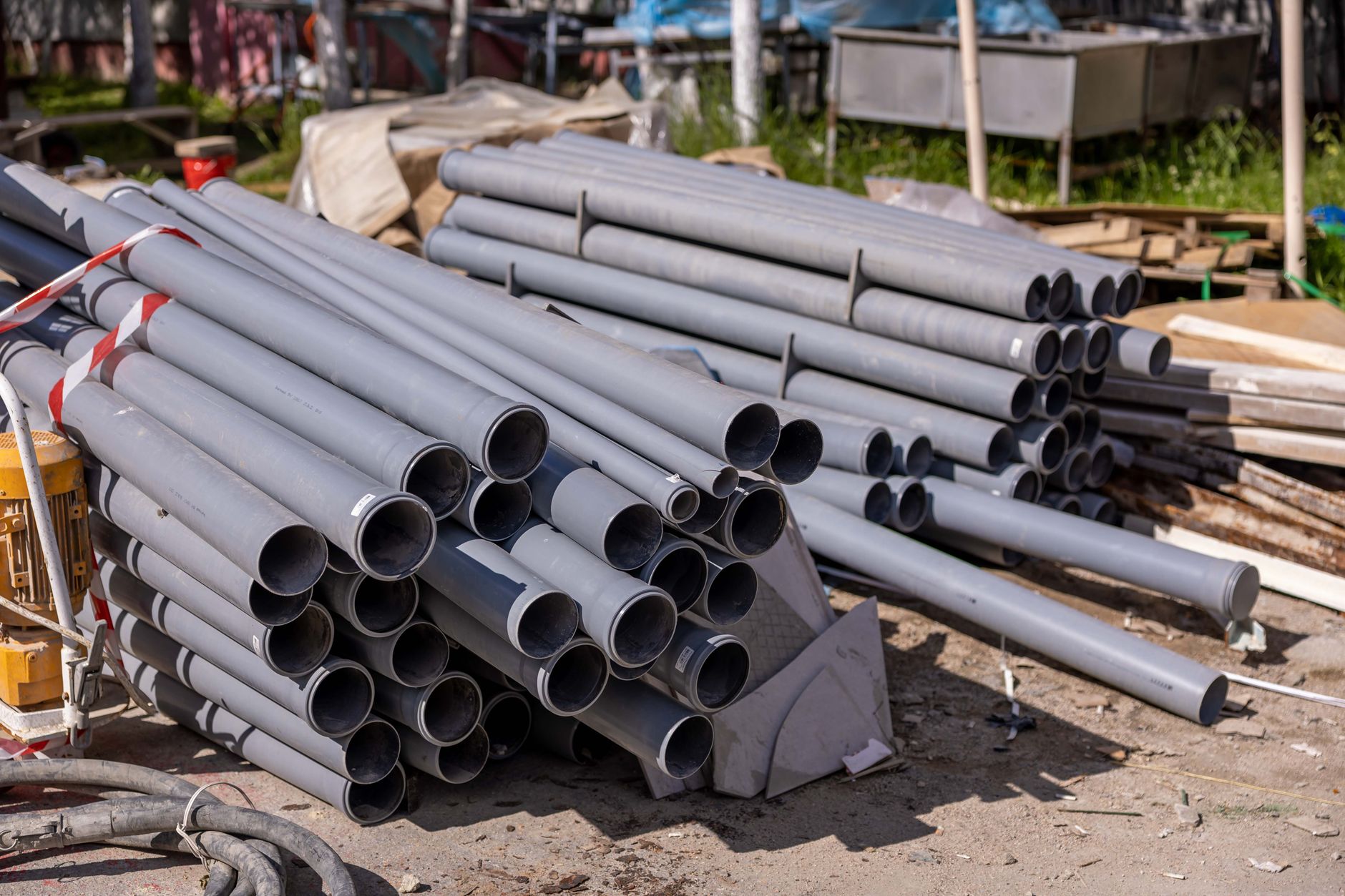
Every effective radon system does one job — hold the soil under your house at lower pressure than the rooms above it, so gas flows to the fan and out the roof instead of through the floor. Foundations vary, so the suction point does too. These are the three configurations that cover essentially every Madison home.
Sub-slab depressurization
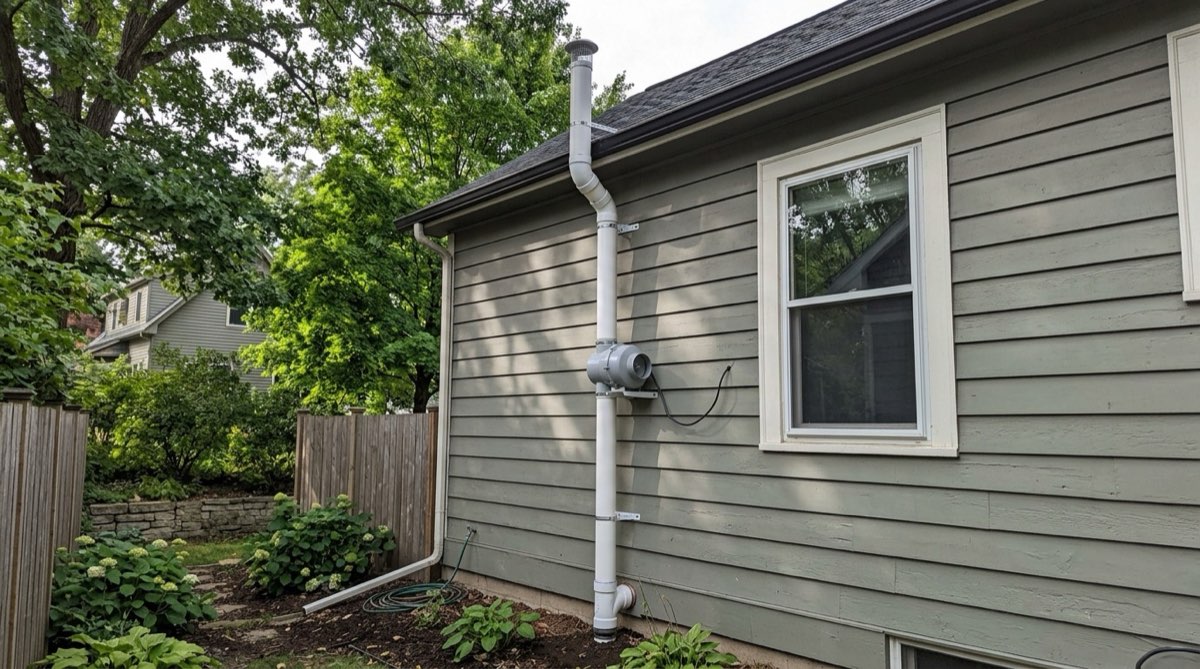
The default: core through the basement slab, excavate a suction pit, seal in a PVC riser, and run it to a continuously spinning inline fan discharging above the eave. A u-tube manometer on the pipe shows the vacuum at a glance.
Under-slab material decides how far one point reaches — washed gravel spreads suction widely; the tighter fills common in older Madison neighborhoods sometimes ask for a second point or a higher-suction fan.
Sump and drain-tile suction
Wisconsin basements almost always drain to a sump through perimeter tile, and that loop is a ready-made radon collector circling the whole footprint. An airtight sealed lid plus suction on the basket often outperforms a slab hole — one connection reaches everywhere the tile runs.
The lid keeps the pump serviceable: sealed grommets for cord and discharge, and a gasketed viewport for checking the float without breaking the seal.
Sub-membrane for crawl spaces
Dirt crawl spaces — under additions, cottages, and older homes near the lakes — get heavy sheeting sealed across the exposed soil with suction drawn beneath it. No membrane, no vacuum: the plastic is what turns a dirt room into a closed system.
Basement-plus-crawl hybrids usually tie both zones into a single fan, which is a design decision to settle at the estimate, not after the drilling.
Marks of a system done right
Sealed floor cracks and sump so the fan is not fighting leaks, the fan mounted outside living space, discharge above the eave away from windows, a visible manometer, and a dated label with the installer's contact. Ask the estimator which configuration your foundation gets and why — the answer should mention your slab, your sump, and your layout.
Choosing without overthinking
You do not pick the system type; your foundation does. What you pick is the installer — and the good ones explain the match in one breath: sump suction because your tile loops the footprint, membrane because the addition sits on dirt, second point because the slabs were poured separately.
If the explanation references your actual basement, you are in good hands. If it references a price sheet, keep calling.