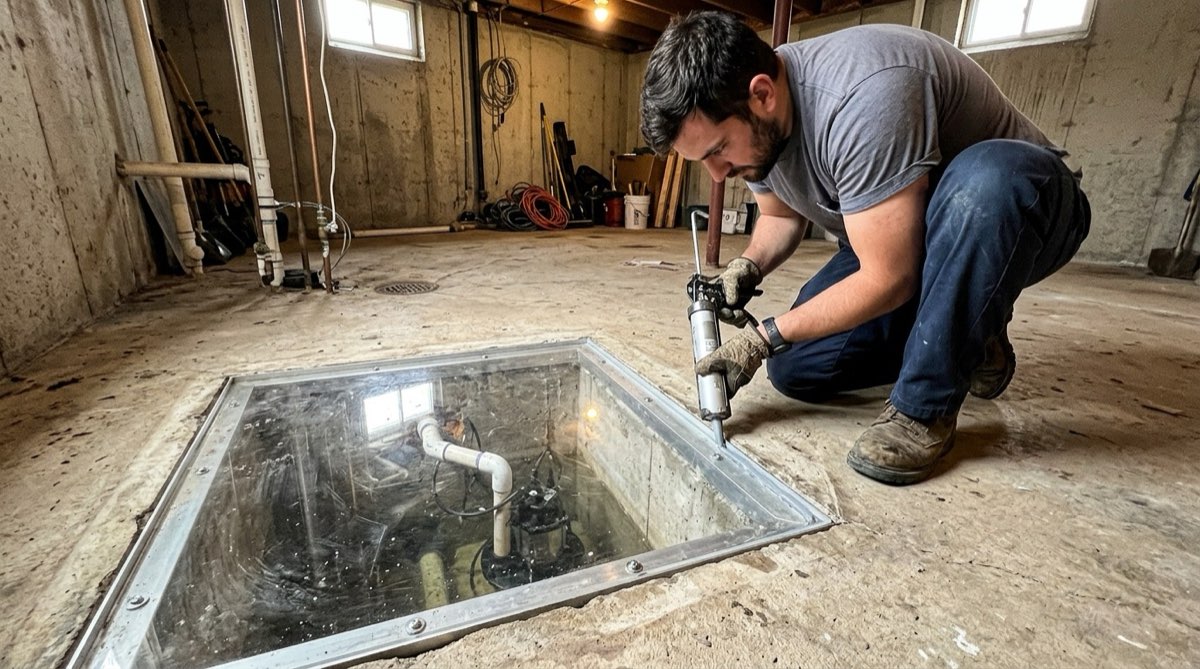
An open sump basket is the biggest radon entry in most Wisconsin basements — and the best collection opportunity. Sealed with an airtight lid and put under suction, the sump turns the drain-tile loop around your foundation into a whole-footprint radon collector.
Reasons to schedule this service
This service may be the right fit when one of these situations sounds familiar:
- the sump is open
- drain tile may connect to soil gas
- water management and radon work overlap
What matters for Madison properties
Madison's wet springs and clay-influenced soils made perimeter drain tile standard practice here, which is why sump-based systems perform so well in this market. The lid is built to stay serviceable: sealed pass-throughs for pump cord and discharge line, plus a gasketed viewport so the float gets checked without breaking the seal.
What affects the estimate
- sump size
- pump access
- lid seal
- drain tile layout
- serviceability
How the work usually goes
Sealing and connection run in order:
- Test Result Review: Review the radon test result, test date, foundation layout, basement use, and any real-estate deadline.
- Foundation And Sump Check: Check slab areas, sump pits, drain tile, crawl spaces, pipe routes, fan locations, and discharge options.
- System Design Planning: Plan the mitigation system, sealing details, electrical needs, fan placement, and retest timing.
- Pipe Fan And Sealing Work: Install or repair the pipe, fan, suction point, sump cover, crawl-space barrier, or sealing work.
- Retest And Maintenance Guidance: Review manometer readings, labels, maintenance notes, and when the home should be tested again.