Radon results arrive as picocuries per liter — pCi/L. Outdoor air sits near 0.4. The EPA's action level is 4.0, with 2.0 to 4.0 flagged as worth considering. What follows is how to read your number and what each range asks of you.
Choose the right test
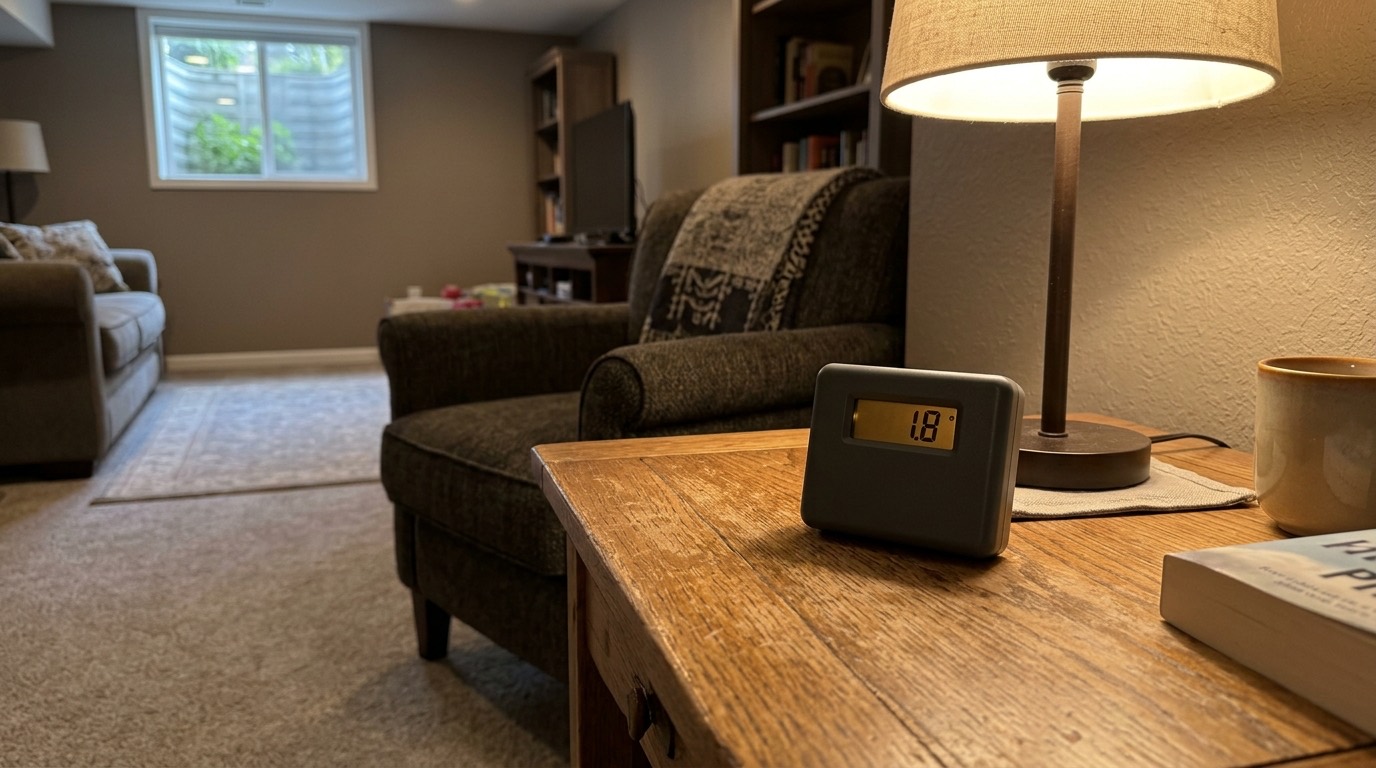
Short-term kits and 48-hour continuous monitors measure days; long-term detectors measure 90-plus and average out weather, season, and that week you left windows open. Real-estate deals use the 48-hour monitor for speed; homeowners with a borderline short-term result should confirm with a long-term test before spending.
Placement rules matter more than brand: lowest lived-in level, closed-house conditions, away from drafts and humidity. A Wisconsin January is actually the ideal test month — the house is operating at maximum radon.
Reading the ranges
Under 2: retest in two years and move on. Between 2 and 4: no mandate, but mitigation is cheap risk reduction, and systems routinely land under 2 — worth it if the basement is lived-in. At 4 or above: fix the house; that is the EPA's direct guidance.
Risk scales with concentration times years. A 15 in the kids' basement bedroom is a different urgency than a 5 in a crawl space nobody enters — but both are solvable with the same hardware.
After mitigation
Retest within 30 days of installation to verify the promise, then every two years as routine. Keep every report in one folder — Dane County buyers and their agents ask, and clean paperwork turns a past radon problem into a present selling point.
The mistakes to skip
Testing with windows open and calling it clean. Trusting one panicked spike without confirmation. Assuming a mitigated house stays fixed without a working fan. Each mistake has the same cure: measured numbers, on a schedule, with the manometer glanced at monthly.
Bottom line
Get the format right (closed house, lowest lived-in level, heating season), read the ranges honestly (fix at 4+, consider at 2-4), confirm surprises, and verify mitigation with a retest instead of trust.
A radon number handled this way stops being a worry and becomes a maintenance item — checked on the same calendar as the furnace.