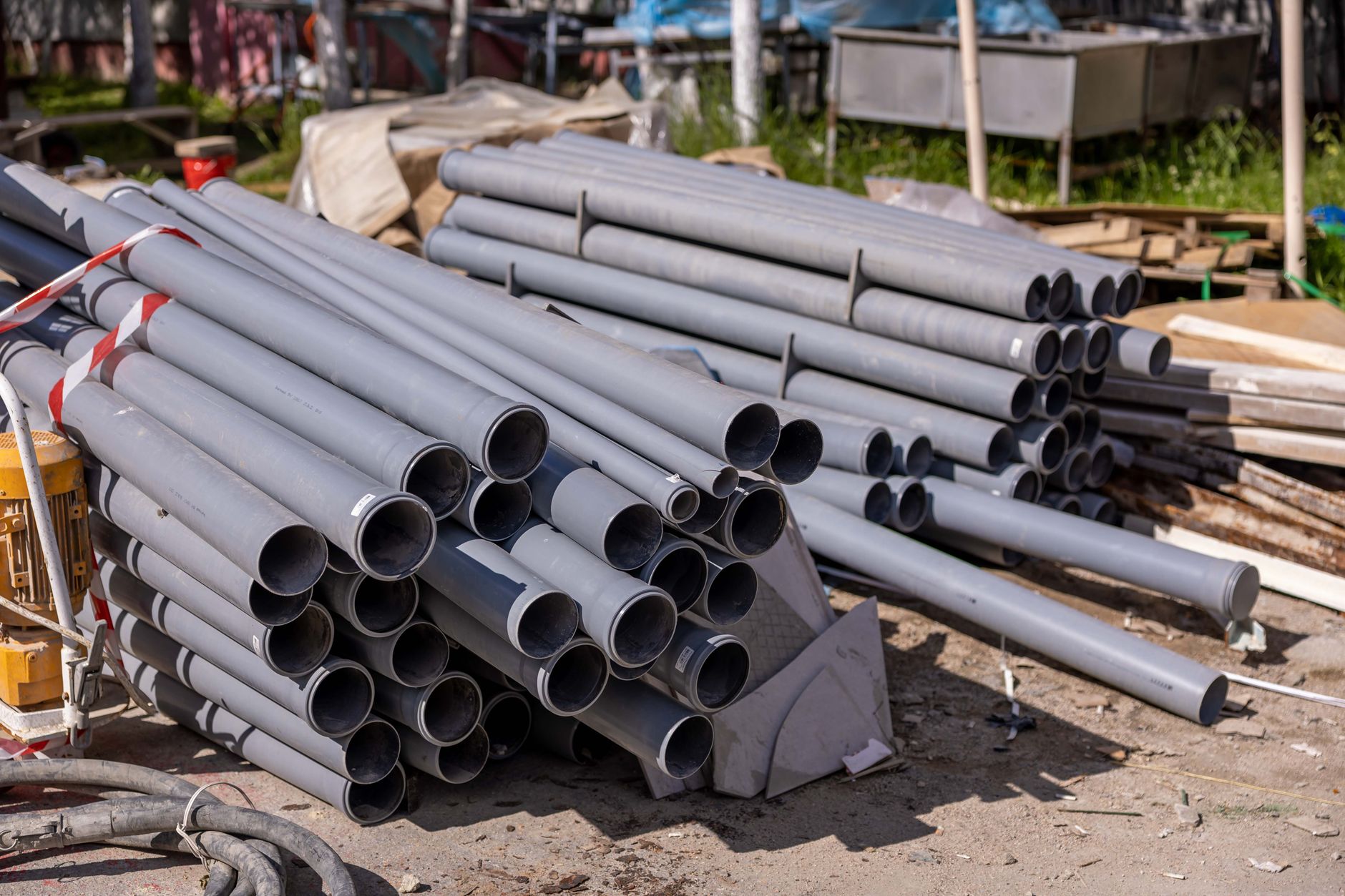
Radon is a radioactive gas that forms as uranium decays in the ground. Outdoors it disperses to nothing; inside a closed Wisconsin house it concentrates, and long-term exposure is the second-leading cause of lung cancer behind smoking. None of that is scare copy — it is the reason a whole licensed trade exists to move the gas around your house instead of through it.
Why Wisconsin ground produces it
The glaciers that shaped Dane County's drumlins and moraines ground uranium-bearing rock into the soil that most of Madison sits on. Ground-fine rock has enormous surface area, which lets radon escape into soil gas efficiently — the geological reason the EPA maps this county Zone 1, its highest category.
Surveys of Wisconsin homes back the map up: depending on the county, roughly one test in two comes back above the federal action level. High results here are ordinary, not alarming.
How it gets inside
A heated house acts like a slow chimney — warm air rises and leaks out high, which pulls a slight vacuum at the foundation. Soil gas answers that vacuum through slab cracks, the floor-wall joint, sump baskets, and utility penetrations.
A Madison winter maximizes the effect: months of heating, sealed windows, and frozen ground that funnels soil gas toward the one warm path — your basement.
Basements raise the stakes
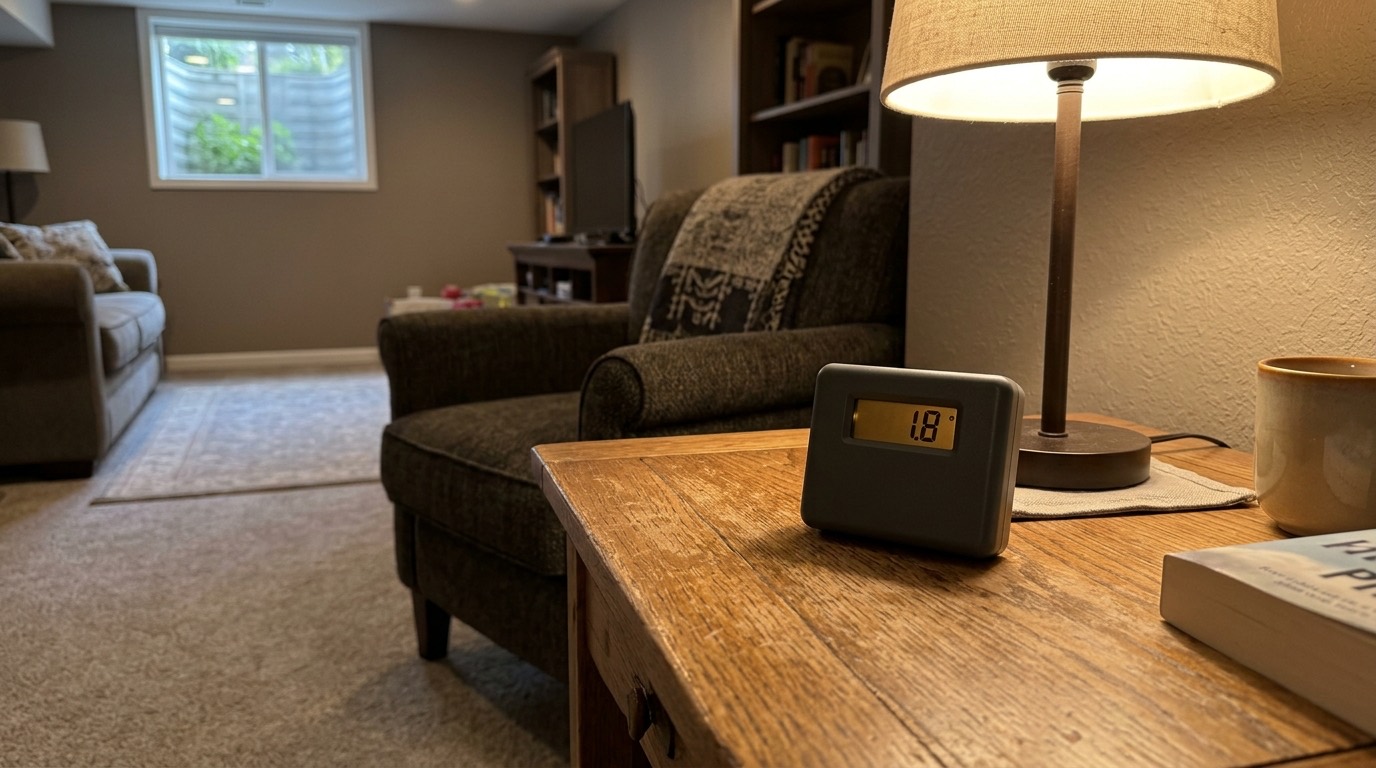
Madison's housing runs heavily to basements, and heavily to finished ones — rec rooms, offices, guest bedrooms. A finished basement turns the highest-radon space in the house into a place people spend real hours, which is exactly when the number starts to matter.
What to actually do
Test — a hardware-store kit or a 48-hour professional monitor, in the lowest lived-in level, ideally during heating season. At or above 4 pCi/L, mitigate; the standard system is installed in a day and typically lands homes under 2.
Below the action level, calendar a retest in two years. That is the entire homeowner obligation: know your number, act on it once, verify on schedule.
The two-minute summary
Wisconsin geology puts radon under most Dane County homes; the stack effect pulls it in; basements concentrate it; winter maximizes it. A cheap test converts all of that from theory to a number, and a one-day mitigation system fixes the numbers that need fixing.
The only genuinely bad position is not knowing — a Madison house that has never been tested is a coin flip you live inside of.